

Views: 0 Author: Site Editor Publish Time: 2025-11-06 Origin: Site


Ever wonder how industries mix thick, sticky materials efficiently? Meet the Sigma Blade Mixer, a powerhouse in industrial mixing. This unique machine excels in blending high-viscosity substances, crucial for adhesives, food products, and more. In this post, you'll learn what a Sigma Blade Mixer is and why it's vital across various industries.
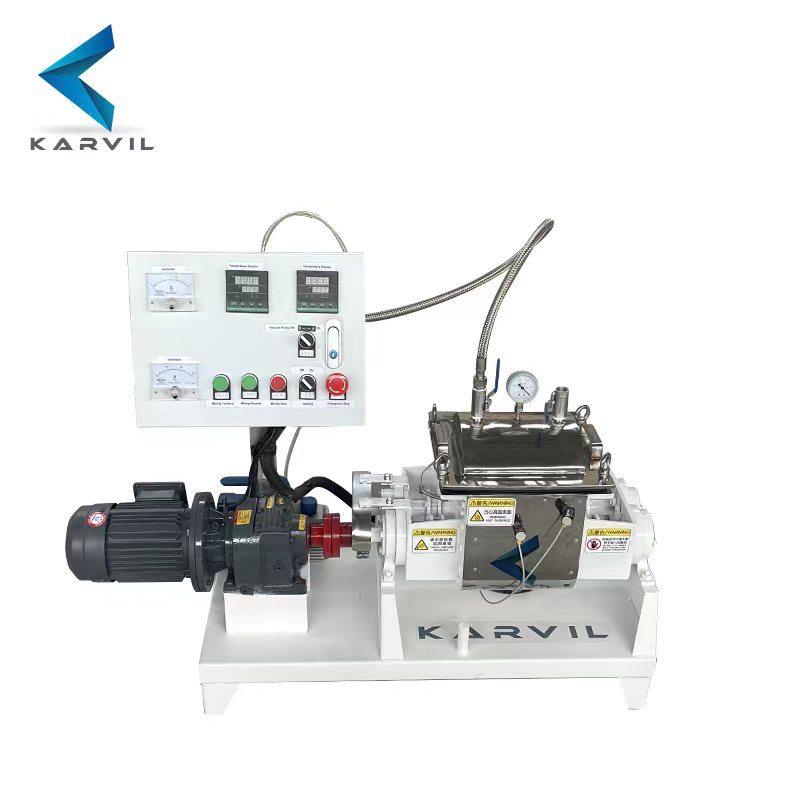
The sigma blade mixer operates primarily on a shearing mechanism, which makes it highly effective for mixing high-viscosity materials. The key to its working lies in the intermeshing sigma-shaped blades. These blades are designed to rotate towards each other inside a double trough-shaped bowl, creating intense shear forces.
This shearing action happens because the blades move in close proximity, almost touching, but without contact. As the blades rotate, they pull the material between them, squeezing and stretching it. This process kneads the material thoroughly, breaking down lumps and ensuring a uniform mix. The mixing action is not just shearing; it also involves bulk movement, stretching, folding, dividing, and recombining the material. This combination helps in handling sticky, dough-like, or highly viscous substances effectively.
The blades' shape plays a crucial role. The sigma shape allows the material to flow steadily from the sides of the trough towards the center, ensuring no dead zones where material might remain unmixed. The blades rotate at fixed speeds, often with different speeds for each blade to enhance the kneading effect. The material is continuously pulled and squeezed against the blades, the saddle, and the side walls of the trough, which further improves the mixing quality.
In operation, powders or viscous masses are introduced from the top. The blades squash the mass flat, roll it on itself, squash it again, and tear it apart. This cycle repeats, creating a thorough mixing and kneading effect. The fixed speed drive ensures consistent mixing, while the close clearance between blades and trough walls maximizes shear force.
This principle allows the sigma blade mixer to handle materials with viscosities reaching up to 10 million centipoises, making it ideal for industries requiring heavy-duty mixing, such as adhesives, food dough, and rubber compounds.
Tip: To maximize the efficiency of your sigma blade mixer, ensure blades are properly maintained and clearances are checked regularly to maintain optimal shearing action.
The sigma blade mixer’s construction is key to its ability to handle thick, sticky materials efficiently. At the heart of its design is the double trough-shaped stationary bowl. This bowl provides a robust container where the mixing happens. It’s usually made from durable materials like Mild Steel, Stainless Steel 304, or Stainless Steel 316. These materials resist corrosion and wear, ensuring the mixer lasts long, even under heavy use.
The bowl often has a jacket covering on two sides. This jacket allows heating or cooling during the mixing process. For example, heating might soften a material for easier mixing, while cooling can prevent overheating that might spoil the product. Some models also come with a dust-free cover or even a vacuum option, which helps keep the environment clean and controls dust or fumes during mixing.
Inside the bowl, two sigma-shaped blades are mounted horizontally, one in each trough. These blades are made from steel castings and are carefully finished to ensure smooth operation. They rotate inward and are set with a close clearance to the container walls. This tight fit is crucial because it creates the intense shearing action needed to knead and mix high-viscosity materials thoroughly.
The blades are connected to a fixed-speed drive, ensuring consistent movement during operation. To reduce wear and tear, the mixer uses a gland pusher with a gun metal bush. This setup minimizes friction on the blade shafts, extending their lifespan and maintaining smooth rotation.
The whole mixer assembly is mounted on a strong steel fabricated stand. This stand supports the machine, absorbs vibrations, and helps keep noise levels low during mixing. The mixer is loaded from the top, and unloading is done by tilting the entire bowl using a rack and pinion drive. This tilting feature makes it easier to remove the mixed material without manual handling, improving safety and efficiency.
Key Construction Highlights:
Double trough-shaped bowl made from corrosion-resistant metals.
Jacketed sides for heating or cooling.
Dust-free or vacuum-ready covers.
Two sigma-shaped, steel-casted blades with close clearance.
Fixed-speed drive system.
Gland pusher with gun metal bush for reduced friction.
Steel fabricated stand for stability and noise reduction.
Tilting bowl for easy unloading.
These construction features combine to make the sigma blade mixer robust, reliable, and ideal for mixing tough, viscous materials in industries like adhesives, food processing, and pharmaceuticals.
Sigma blade mixers use specially designed blades that play a vital role in their efficiency and effectiveness. The two main types of blades you’ll find in these mixers are the Two Wing Blade and the Sigma or Z-form Blade. Each design helps the mixer handle thick, sticky, and dough-like materials by promoting steady material flow and thorough mixing.
The two wing blade features two broad arms extending from the blade’s shaft. These arms sweep through the material, pushing and pulling it from the trough walls toward the center. This action ensures the material moves continuously and avoids dead zones where mixing might be incomplete. The broad surface area of the wings provides a strong kneading effect, which is perfect for highly viscous substances like adhesives or dough.
This blade design is simple yet effective, allowing the mixer to handle sticky masses without clogging or excessive power consumption. The two wing blade also helps in breaking down lumps by applying consistent shear forces as it rotates.
The sigma blade, shaped like the Greek letter sigma (Σ), is the classic blade design that gives the mixer its name. Sometimes called the Z-form blade because of its zigzag shape, it features angled arms that intermesh closely with the opposite blade. This close intermeshing creates intense shear and kneading forces, pulling the material through a tight gap.
The Z-form blade excels at folding and stretching the material, which enhances the mixing process. Its shape promotes a steady flow from the trough sides toward the center, ensuring no part of the batch remains unmixed. This blade design is especially useful for extremely viscous or sticky materials that require heavy-duty kneading.
Both blade types are mounted horizontally in the double trough mixer bowl. They rotate inward, contra to each other, creating a powerful shearing zone between the blades and the container walls. The blades’ shape and movement pull, squash, tear, and knead the material repeatedly.
This continuous action helps:
Break down lumps and agglomerates
Mix powders and viscous masses uniformly
Prevent material buildup on the trough walls
Ensure consistent texture and quality in the final product
The drive mechanism of a sigma blade mixer is crucial for its efficient operation, especially when handling high-viscosity materials. Typically, the mixer is powered by a motor of the TEFC (Totally Enclosed Fan Cooled) type or a TEFC flameproof motor for hazardous environments. These motors usually operate at a speed of around 440 RPM. The motor connects to a reduction gearbox from a reputed manufacturer, which adjusts the speed and torque to the required levels for the mixing process.
The gearbox drives spur gears with machine-cut teeth, ensuring smooth and reliable power transmission. These gears connect the motor to the two sigma blades inside the mixer bowl, enabling them to rotate in opposite directions. The entire drive assembly is enclosed in a guarded housing to ensure safety and facilitate grease lubrication for long-lasting performance.
The mixing process begins by introducing powders or viscous masses from the top of the trough. Since dry blending can generate dust and wet granulation may cause evaporation, the mixer body is covered to contain dust and maintain process integrity.
As the motor powers the blades, the sigma-shaped blades perform a series of actions:
Squashing the mass flat against the trough walls.
Rolling the material on itself to promote uniformity.
Squashing again to break down lumps.
Tearing and shearing the mass between moving blades and stationary surfaces.
This continuous kneading action pulls, stretches, and folds the material, enhancing the mixing quality. The blades rotate at fixed speeds, but often at different speeds relative to each other. This differential speed improves the kneading effect by varying shear forces applied to the material.
The design and ruggedness of the blades affect the mixing efficiency. Some blades feature serrated edges to increase shredding action, further breaking down tough lumps or agglomerates. The close clearance between blades and trough walls maximizes shear forces, ensuring thorough mixing.
Overall, the drive system provides consistent, high-torque power to the blades, enabling the sigma blade mixer to handle challenging materials like adhesives, rubber compounds, and doughs with viscosities up to 10 million centipoises.
Sigma blade mixers come with features designed to handle demanding mixing tasks, especially for high-viscosity materials. Their capacity ranges broadly, typically from small batch sizes up to 5,000 liters (1,321 gallons). For larger industrial needs, custom models can reach capacities as high as 10,000 liters (2,642 gallons). This wide range makes them versatile for various production scales, from small labs to large manufacturing plants.
The design of these mixers adheres to international standards such as CODAP and ASME, ensuring safety, reliability, and compliance with industry regulations. This compliance is crucial for industries like pharmaceuticals and food processing, where hygiene and safety are paramount.
One standout feature is the modular design. This means the mixer can be customized easily to fit specific application needs. Modularity allows manufacturers to add or remove components, adjust sizes, or modify features like blade types and drive systems without redesigning the entire machine. This flexibility helps businesses optimize their processes without incurring high costs for entirely new equipment.
Temperature management is another critical aspect. The mixer’s double trough bowl is jacketed on two sides, allowing for heating or cooling during mixing. This feature is essential when working with temperature-sensitive materials. For example, heating can soften certain compounds for easier mixing, while cooling prevents overheating that might degrade the product. The jacketed design ensures temperature control is uniform and efficient, improving product quality.
Additionally, some models offer independent blade arm drives. These drives can rotate at different speeds, and the speed ratio is adjustable. This capability enhances the kneading action by varying shear forces, making the mixing process more thorough and adaptable to different material viscosities.
Loading and unloading options also add to the mixer's versatility. You can choose between stationary units or tilting units for easier handling of materials. Some models even feature bottom valve discharge systems, which allow quick and clean unloading, reducing manual labor and contamination risks.
For specialized processes, mono-screw extruder models are available. These combine mixing and extrusion in one machine, useful for certain rubber or plastic compounds.
Summary of key features:
Capacity from 5,000 to 10,000 liters (custom sizes available)
Built to international standards like CODAP, ASME
Modular design for easy customization
Jacketed trough for heating or cooling
Independent blade arm drives with adjustable speed ratios
Choice of stationary, tilting, or bottom valve discharge units
Mono-screw extruder options for combined mixing and extrusion
Sigma blade mixers are highly versatile and find extensive use across various industries. Their ability to handle high-viscosity, sticky, and dough-like materials makes them ideal for many specialized applications.
Adhesives often require thorough mixing of thick, sticky components to achieve uniformity and performance. Sigma blade mixers excel here due to their strong shearing and kneading action, which breaks down lumps and blends resins, fillers, and additives effectively. This ensures the adhesive has the right consistency and bonding properties.
In the food industry, sigma mixers handle doughs, pastes, and confectionery products like marzipan and sugar pastes. For example, biscuit dough benefits from the mixer’s ability to knead without overheating or damaging ingredients. The jacketed bowl allows temperature control, which is crucial for food products sensitive to heat. Additionally, the mixer is used for chewing gum and bakery mixtures, where uniform texture and consistency are vital.
Pharmaceutical manufacturing demands precise mixing of powders and viscous masses for tablets, ointments, and creams. Sigma blade mixers provide uniform blending and kneading, essential for consistent drug efficacy and quality. They can mix active ingredients with excipients, ensuring homogeneity without degrading sensitive compounds.
In the chemical industry, sigma mixers handle materials like carbon pastes, sealing compounds, mastics, and silicone rubber. Their robust design allows them to mix tough substances like butyl rubber and fiberglass resin doughs. The mixer’s shearing action ensures thorough dispersion of pigments and fillers in inks and pigment products.
Other notable applications include:
Ceramics: Mixing clay and additives evenly for molding.
Explosives: Safe blending of sensitive materials under controlled conditions.
Grinding wheel preparations: Homogeneous mixing of abrasive materials.
Soaps and detergents: Combining oils, fats, and chemicals into uniform batches.
The sigma blade mixer's ability to work with viscosities up to 10 million centipoises makes it suitable for these demanding processes.
Tip: When using sigma blade mixers for food or pharmaceutical products, always ensure proper cleaning and sanitation protocols to maintain product safety and compliance.
The sigma blade mixer offers several advantages making it popular for mixing highly viscous materials. One major advantage is the minimal dead space during mixing. The design of the double trough and intermeshing sigma blades ensures almost all material is continuously moved and kneaded. This reduces waste and prevents unmixed pockets, which is crucial when working with sticky or dough-like substances.
Another benefit is its ability to handle very high-viscosity materials, even up to 10 million centipoises. This makes it ideal for industries like adhesives, rubber compounds, and food doughs. The strong shearing and kneading action created by the close clearance between blades and trough walls guarantees thorough mixing and uniform texture.
The mixer’s robust construction and fixed-speed drive provide consistent performance. The fixed speed ensures steady kneading action without fluctuations, which can be important for repeatable product quality.
However, there are some disadvantages to consider. One is the fixed speed operation. The blades rotate at a constant speed, which limits flexibility. Some materials might benefit from variable speeds to optimize mixing or reduce power consumption. The fixed speed means the mixer may not be ideal for all types of materials or processes requiring speed adjustments.
Another downside is high power consumption. Compared to other mixers, sigma blade mixers consume more energy, typically ranging from 45 to 75 kW per cubic meter of material mixed. This can increase operational costs, especially for large-scale production.
Additionally, the mixer is not designed for extrusion unless specifically configured as a double arm kneader extruder variant. This limits its use if extrusion is part of your process.
In summary, sigma blade mixers excel at thorough mixing of sticky, viscous masses with minimal waste. But their fixed speed and high power needs may pose challenges depending on your application.
The sigma blade mixer effectively mixes high-viscosity materials through shearing action and intermeshing blades. Its robust construction and ability to handle viscosities up to 10 million centipoises make it ideal for various industries. Despite high power consumption and fixed speed, its efficiency in mixing sticky substances is unmatched. Looking ahead, sigma blade mixers will continue to evolve, offering more customization and efficiency. Karvil provides advanced sigma blade mixers, ensuring optimal performance and value for industries requiring precise mixing solutions.
A: Sigma Blade Mixers are ideal for handling sticky, dough-like substances, offering thorough mixing and uniform texture, crucial in industries like adhesives and food processing.
A: Benefits include minimal dead space, effective handling of high-viscosity materials, and robust construction for consistent mixing performance.
A: The cost of a Sigma Blade Mixer varies based on size, capacity, and custom features, typically ranging from thousands to tens of thousands of dollars.


