

Views: 0 Author: Site Editor Publish Time: 2025-11-12 Origin: Site


Have you ever wondered how industries achieve perfect blends of thick, sticky materials? The Sigma Blade Mixer is the key player in this process. It's crucial in industries like pharmaceuticals and food processing. In this article, you'll learn about its principles, construction, and working mechanisms, revealing why it's indispensable for efficient mixing.
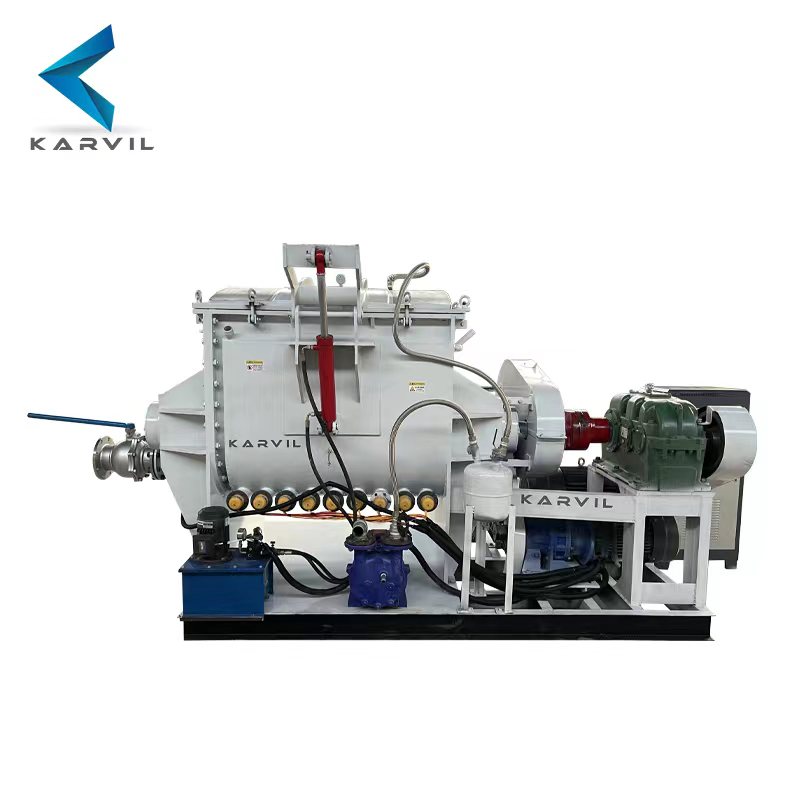
The Sigma Blade Mixer works on the principle of shearing and kneading action, which is essential for mixing high-viscosity materials. It uses two Z-shaped blades that rotate in opposite directions inside a mixing chamber. These blades move close to each other and the chamber walls, creating a strong shearing force that stretches, folds, and kneads the material repeatedly.
This shearing action breaks down lumps or agglomerates, ensuring even mixing throughout the batch. One blade usually rotates faster than the other, typically about 1.5 times faster. This speed difference prevents the material from just spinning around and instead pulls it between the blades, enhancing the mixing efficiency.
The Z-shaped blades' design is crucial. Their shape and arrangement maximize contact with the material, applying intense mechanical energy that combines the ingredients uniformly. The blades push the material from one side to the other, constantly folding and redistributing it, which leads to a homogeneous mixture.
The mixing process starts slowly to avoid splashing or dust formation. As the blades rotate, the speed increases, intensifying the kneading action. The mixer can handle materials ranging from thick doughs to sticky pastes, making it versatile across industries.
In summary, the principle behind the Sigma Blade Mixer relies on:
Shearing and kneading action: Breaking down and blending materials thoroughly.
Z-shaped blades: Designed to maximize contact and mixing efficiency.
Opposite rotation speeds: Creating differential shear forces for better homogenization.
Progressive speed control: Ensuring gentle start and effective kneading.
This principle allows the mixer to handle materials that are difficult to mix by conventional means, such as rubber compounds, adhesives, and food doughs, providing a consistent and high-quality blend.
The Sigma Blade Mixer is built to handle tough mixing tasks, especially for thick, sticky materials. Its construction focuses on durability, efficiency, and precise control.
The mixer’s main body usually consists of a double U-shaped trough made from mild steel or stainless steel. Stainless steel is preferred in industries like pharmaceuticals and food because it resists corrosion and is easy to clean. The trough is welded tightly to prevent leaks and designed with minimal clearance between the blades and the walls. This close fit is essential for creating strong shear forces during mixing.
The mixer’s robust frame supports heavy-duty operation. Shafts and blades are crafted from solid steel, often hardened or coated to resist wear and tear. This ensures long service life even when mixing abrasive or heavy materials.
The mixer has two Z-shaped blades placed side-by-side inside the trough. These blades rotate in opposite directions, creating a powerful kneading and shearing action. One blade typically rotates about 1.5 times faster than the other, which improves mixing by pulling material between them rather than letting it spin freely.
The blades are mounted on shafts that remain perfectly aligned to avoid wobbling. This alignment is crucial because any bending reduces mixing efficiency and increases wear. The blades’ Z-shape is designed to maximize contact with the material, folding and stretching it repeatedly for uniform mixing.
Temperature control is vital during mixing, especially for heat-sensitive or reactive materials. The mixer trough is surrounded by a cooling jacket—a hollow space where coolant flows. This jacket can circulate chilled water, hot oil, or steam to maintain the desired temperature inside the mixing chamber.
Maintaining the right temperature prevents overheating, which could spoil the material or cause premature reactions. It also helps control viscosity, making mixing easier and more efficient. Some mixers feature integrated heating and cooling systems to switch quickly between temperature modes.
Tip: Regularly inspect blade alignment and clearance to maintain mixing efficiency and prevent premature wear in your Sigma Blade Mixer.
The working of a Sigma Blade Mixer revolves around three key stages: loading and initial mixing, speed variation and kneading, and temperature management. Each stage plays a vital role in ensuring thorough and uniform mixing of high-viscosity materials.
The process begins by loading the materials into the mixer’s trough. Operators typically fill the mixer to about 60-80% of its capacity to allow enough space for effective mixing without overloading. Once loaded, the two Z-shaped blades start rotating slowly in opposite directions. This slow speed helps gently combine the ingredients without splashing or generating dust, which is especially important when handling powders or volatile substances.
At this stage, the blades push and fold the materials lightly, starting to break down lumps or clumps. The slow rotation ensures that the materials begin to interact and distribute evenly throughout the mixer.
After the initial mixing, the blade speed gradually increases. One blade rotates about 1.5 times faster than the other, creating a differential speed that pulls the material between the blades rather than letting it spin freely. This difference in speed produces strong shear and kneading forces.
These forces stretch, fold, and compress the material repeatedly, breaking down any remaining lumps and ensuring a homogeneous mixture. The kneading action is especially effective for thick, sticky, or pasty substances that are difficult to mix by conventional methods.
Operators can adjust the speed depending on the material’s viscosity and the desired mixing intensity. Some mixers use variable frequency drives (VFDs) to allow precise speed control, improving energy efficiency and mixing quality.
Temperature control is crucial during the mixing process, especially for heat-sensitive or reactive materials. The mixer’s trough is surrounded by a cooling or heating jacket, which circulates fluids like chilled water, hot oil, or steam.
This jacket maintains the material at the desired temperature, preventing overheating that could degrade the product or trigger unwanted chemical reactions. Proper temperature management also helps control the viscosity of the mixture, making it easier to knead and blend.
In some cases, the mixer can switch between heating and cooling modes during different phases of mixing to optimize the process.
Tip: Always monitor the temperature and adjust blade speeds gradually during mixing to prevent material damage and ensure a consistent, high-quality blend.
The Sigma Blade Mixer is a versatile tool used across many industries due to its ability to handle high-viscosity materials efficiently. Its unique design and powerful mixing action make it ideal for processes where thorough kneading and uniform blending are essential.
In chemical manufacturing, the Sigma Blade Mixer handles thick pastes, adhesives, sealants, and polymers. Its strong shearing action ensures even dispersion of fillers and additives, crucial for product consistency. For example, in producing silicone rubber or epoxy resins, the mixer blends components thoroughly, preventing lumps or uneven curing.
Pharmaceutical companies use Sigma Mixers to prepare ointments, creams, gels, and other viscous formulations. The mixer’s precise temperature control helps protect heat-sensitive ingredients during mixing. It also ensures uniform distribution of active pharmaceutical ingredients (APIs) in the base, which is vital for dosage accuracy and product safety.
The food industry benefits from Sigma Mixers when making dough, chewing gum, candy, or pastes. The mixer’s kneading action develops texture and consistency without overheating ingredients, preserving flavor and quality. For instance, in bakery production, it helps mix dough uniformly, improving the final product’s structure.
Cosmetic manufacturers use Sigma Mixers for creams, lotions, and gels. The mixer blends thick, sticky ingredients smoothly, producing stable emulsions. Temperature control prevents degradation of delicate components like vitamins or fragrances, ensuring product efficacy and shelf life.
Beyond these sectors, Sigma Blade Mixers find applications in rubber compounding, plastics, inks, pigments, and battery materials. Their robust construction withstands abrasive fillers and heavy loads. For example, in rubber manufacturing, the mixer evenly disperses carbon black and other additives, enhancing the material’s physical properties.
Additionally, industries like paint, detergents, and chemicals rely on Sigma Mixers to produce consistent, high-quality products by thoroughly blending viscous substances.
The Sigma Blade Mixer offers several key advantages, especially when handling high-viscosity materials. Its unique design and powerful mixing action make it a top choice for many industries.
One of the biggest strengths of the Sigma Blade Mixer is its ability to mix thick, sticky substances quickly and thoroughly. The two Z-shaped blades rotate in opposite directions at different speeds, creating strong shear and kneading forces. This action breaks down lumps and blends materials uniformly, which is hard to achieve with traditional mixers.
Whether it’s rubber compounds, heavy doughs, or pastes, the mixer handles them effectively. The close clearance between blades and the chamber walls maximizes shear force, ensuring no material is left unmixed. This efficiency reduces mixing time and improves product quality.
Sigma mixers are built tough to withstand harsh working conditions. The mixer’s body and blades are usually made from stainless steel or mild steel, often hardened or coated for extra wear resistance. This durability means the mixer can handle abrasive fillers and heavy loads without frequent breakdowns.
The shafts and blade assemblies are precisely aligned to prevent wobbling or bending, which helps maintain consistent mixing performance. This robust construction also lowers maintenance costs and extends the machine’s lifespan, making it a cost-effective investment over time.
The Sigma Blade Mixer is versatile and adaptable to many industrial applications. It suits chemical, pharmaceutical, food, cosmetics, rubber, and plastics industries, among others. Its ability to mix various materials—such as adhesives, ointments, doughs, and sealants—makes it highly valuable.
Temperature control features, like cooling jackets, allow it to process heat-sensitive materials safely. Adjustable blade speeds and customizable blade designs further enhance its flexibility, enabling operators to optimize mixing for specific materials and batch sizes.
While the Sigma Blade Mixer offers excellent performance for mixing high-viscosity materials, it comes with some challenges and drawbacks that industries should consider.
One major challenge is the high initial investment. Sigma Blade Mixers are built with robust materials like stainless steel and feature precise engineering, which drives up the price. For small businesses or startups, the upfront cost can be a barrier. However, this cost often balances out over time due to durability and efficiency.
The mixer’s size can be another limitation. Sigma Blade Mixers usually require a dedicated, sizable area for installation and operation. Their trough and blade assembly are large to handle thick materials effectively. Facilities with limited floor space may find it difficult to accommodate these machines without significant rearrangements.
Sigma Blade Mixers excel in handling large, viscous batches but tend to be less efficient for small-scale mixing. The design favors bulk processing, so when used for small batches, energy consumption remains high, and mixing may not be as uniform. This inefficiency can lead to wastage of materials and energy, making it less ideal for R&D or pilot-scale operations unless a smaller model is used.
Though durable, the mixer’s complex blade arrangement and tight clearances require regular maintenance. Misalignment or wear can reduce mixing efficiency and increase downtime. Maintenance demands skilled technicians, which can add to operational costs.
Operating the mixer at high speeds generates significant noise and vibration. This can affect worker comfort and may require soundproofing measures or vibration dampeners, adding to installation costs.
The future of Sigma Blade Mixer technology is shaping up to be more energy-efficient, smarter, and flexible to meet evolving industrial needs.
Newer Sigma mixers are being designed to use less energy while maintaining or improving mixing performance. Improved motor designs and advanced gearboxes reduce power loss. Variable frequency drives (VFDs) allow precise speed control, optimizing energy use depending on the material’s viscosity and mixing stage. For example, mixers can run at lower speeds during initial loading, then ramp up only when needed, saving electricity. Energy-efficient designs also reduce heat generation, lowering cooling demands and overall operating costs.
Modern Sigma Blade Mixers are increasingly equipped with sensors that monitor vibration, temperature, and torque in real time. These sensors connect to the Internet of Things (IoT) platforms, enabling predictive maintenance. Instead of waiting for a breakdown, operators receive early warnings about potential issues like blade misalignment or bearing wear. This proactive approach minimizes downtime and extends equipment life. For example, a mixer could alert maintenance teams before a shaft starts to bend, preventing costly repairs and production delays.
As industries demand more adaptability, Sigma mixers are adopting modular designs. This means components like blades, troughs, and drive units can be swapped or upgraded easily without replacing the entire machine. Modular mixers support quick changes in production lines, accommodating different materials or batch sizes. For instance, a manufacturer can switch from mixing food dough to adhesives by changing blades and adjusting controls, all within the same mixer frame. This flexibility reduces capital expenses and improves responsiveness to market changes.
The Sigma Blade Mixer excels in mixing high-viscosity materials with its unique shearing and kneading action. Its robust construction and precise temperature control make it versatile across industries like pharmaceuticals and food. Despite high initial costs, its durability and efficiency justify the investment. Industry professionals should consider the Sigma Blade Mixer for consistent, high-quality blending. For more information, visit Karvil, a leader in innovative mixing solutions, offering products that deliver exceptional value and performance.
A: Sigma Blade Mixers are ideal for industrial use due to their efficiency in mixing thick, sticky materials and their durable construction, suitable for various industries.
A: Benefits include efficient mixing of high-viscosity materials, durable construction, versatility across industries, and precise temperature control.
A: Regularly inspect blade alignment and clearance, maintain proper temperature control, and adjust speeds gradually to prevent material damage and ensure efficient operation.


